
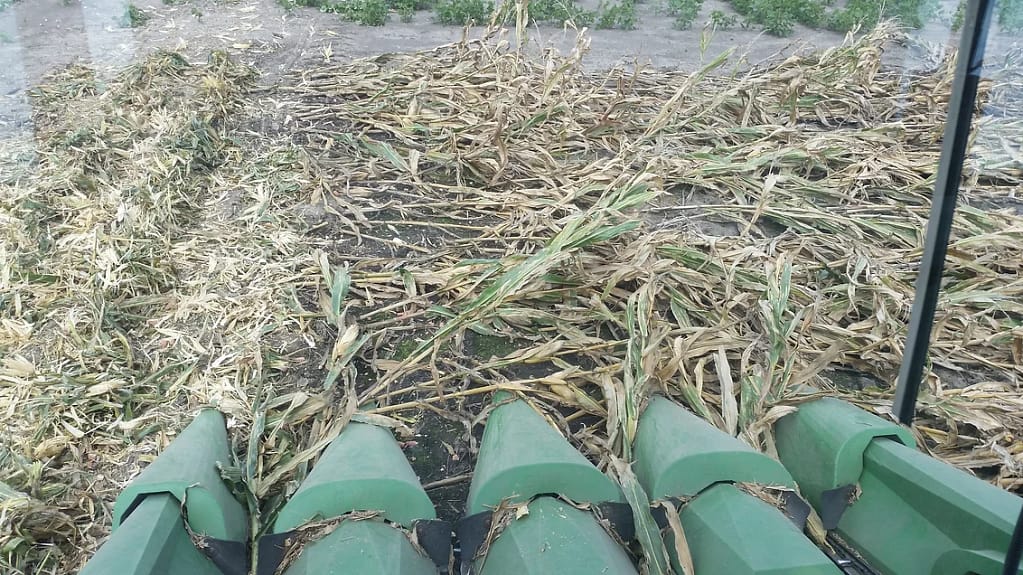
This time of year, companies are trying to place trials in areas with the type of insect, disease, or weed pressure for the product they are testing. One thing that we do is plant a trap crop to ensure that it will have corn rootworm pressure to test insecticides, seed treatments, and trained (BT) genetics. What makes a good trap crop? Over the years we have found that making a good trap crop requires the following: – make it the best place for adult rootworm beetles in the area to lay their eggs – go to the same area year in and year out, to help build populations – provide the right type of plants in the trap crop to ensure that a “smorgasbord” of feeding and laying sites are available
What we do: At our Indiana farm we have been doing a trap crop for over 10 years in the same area. We have some rootworms that are considered the “variant” which means they like to lay eggs in soybeans not only in corn. These rootworms have adapted to the corn/soybean rotation as a survival mechanism. Therefore, we often see higher rootworm pressure in corn following soybeans than corn on corn. The primary rootworms that we have in Indiana are Western Corn rootworms (95%). To make the trap crop work for the variant rootworms we plant sweetcorn, pumpkins/squash, and soybean. Generally, we use 4 rows of sweetcorn, pumpkins, and then interplant soybeans over our pumpkins. Rootworm beetles are attracted to the cucurbits and the sweetcorn silks. We delay planting the trap crop until June to ensure that adult beetles in the area will be drawn into the area because we will have late silking corn. The late-planted soybeans also act as good egg-laying sites. Weed control can be a challenge in the trap crop. We use a combination of herbicides and intern labor to keep it manageable. Rootworm beetles also like Giant Ragweed pollen so leaving a few of these weeds also helps. The late planting can also attract corn earworms, so most of our sweetcorn is not the best.
At our South Dakota farm, we do not have the variant so we generally use sweetcorn/pumpkin mix that is also late planted. We have both Westerns and Northerns at this site. We are going into our third year of trap crop at the same site. How do you know you will have good pressure? By having a late-planted trap crop, we have pumpkin blossoms right up to the first frost. In late September and early October, we can check the pumpkin blossoms and see how many adult beetles are present. This is generally a good indication that we have attracted adult beetles and they have laid eggs in the area. Sometimes we will see 20-30 adult beetles in a single blossom. We have been asked to take soil samples to check for egg numbers in the fall. This is an okay method but often soil samples do not find the egg-laying sites or the beetles laid eggs in soil cracks deeper than the sampling method. Will have a trap crop guarantee pressure? A trap crop will not guarantee pressure. Cold winter temperatures without snowfall and excessive rainfall at larva hatch can reduce rootworm survival. A trap crop increases the likelihood that high numbers of eggs have been laid in an area. We plant between 3-5 acres of trap crop at each location. There is still plenty of room for some trials.
Hi, this is a comment.
To get started with moderating, editing, and deleting comments, please visit the Comments screen in the dashboard.
Commenter avatars come from Gravatar.